Post
Watch Brands Ranked: The Complete Hierarchy from Budget to Haute Horlogerie
Jun
The watch industry is unusual in its explicit, broadly acknowledged hierarchy of prestige and quality. Watch Brands Ranked
Unlike many consumer goods categories where brand reputation is largely marketing-driven, the watch world’s hierarchy reflects genuine differences in movement quality, finishing standards, historical heritage, and craftsmanship. Watch Brands Ranked
Understanding this hierarchy helps collectors make informed decisions and appreciate the genuine value differences between price tiers. Watch Brands Ranked
Tier One: Ultra-High Horlogerie (Above $30,000) Watch Brands Ranked
At the absolute apex of watchmaking, a handful of brands represent the perfection of the craft. Watch Brands Ranked
These are watchmakers in the fullest sense — companies that design and produce their own complications, movements, cases, dials, and straps with minimal external sourcing. Watch Brands Ranked
Patek Philippe is widely considered the world’s greatest watchmaking company. The Geneva manufacture produces between 50,000 and 60,000 watches per year (compared to millions from major commercial brands), creating genuine scarcity. Watch Brands Ranked
Patek’s movements represent the standard against which others are judged, and their complicated watches — perpetual calendars, minute repeaters, tourbillons — are among the most technically sophisticated objects humans manufacture. Watch Brands Ranked
The slogan “You never actually own a Patek Philippe, you merely look after it for the next generation” encapsulates their positioning perfectly. Watch Brands Ranked
A. Lange & Söhne represents German watchmaking at its absolute finest. Founded in the Saxon town of Glashütte in 1845, dissolved by the East German communist government in 1948, and magnificently re-founded in 1990, Lange produces perhaps 5,000 watches per year of extraordinary quality.
The signature Three-Quarter Plate movement architecture, the outsize date complication, and the meticulous hand-finishing of every component place Lange at the very top of the craft.
Vacheron Constantin, founded in 1755, is the world’s oldest continuously operating watchmaking company.
Their Métiers d’Art series demonstrates that watchmaking can incorporate artistic traditions including enameling, engraving, and gem-setting at the highest possible level.
The Reference 57260, a bespoke commission featuring 57 complications, was the most complicated watch ever created when delivered in 2015.
Tier Two: Grand Manufactures ($10,000–$30,000)
These brands possess full manufacture status (producing movements in-house) and historical legitimacy, producing watches at the highest commercial level.
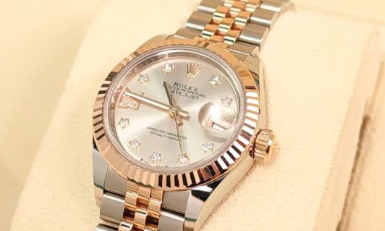
Rolex needs no introduction as the world’s most recognized luxury brand.
Producing approximately 800,000 watches per year, Rolex achieves remarkable consistency at scale. Their movements — featuring Rolex’s proprietary Parachrom hairspring, COSC chronometer certification, and 70-hour power reserves — represent excellent industrial watchmaking.
The brand’s cultural cachet and value retention are unmatched in commercial watchmaking.
Audemars Piguet created the modern luxury sports watch with the Royal Oak in 1972 — a radical design by Gerald Genta that used an octagonal bezel, exposed screws, and an integrated bracelet to create a luxury watch for the emerging jet-setting generation.
The Royal Oak remains one of the most copied, referenced, and coveted designs in watchmaking.
Jaeger-LeCoultre is often called “the watchmaker’s watchmaker” for its extraordinary depth of movement manufacturing capability.
JLC has created over 1,200 calibers and manufactures nearly every component of its watches in-house, including its own escapement components, hairsprings, and finishing tools.
The Reverso (1931), Geophysic (1958), and Master Ultra Thin series are among their landmark achievements.
Tier Three: Prestige Commercial ($3,000–$10,000)
Brands in this tier produce genuinely excellent watches, typically with in-house movements, at price points accessible to affluent consumers.
IWC Schaffhausen produces exceptional pilot’s watches, dress watches, and the legendary Portugieser series from their manufacture in Schaffhausen, Switzerland.
The brand’s engineering orientation produces movements with exceptional practical performance, including the In-house Calibre 52110 with a 7-day power reserve.
Panerai offers an unusual value proposition — large (44-47mm), legible, Italian-Navy-heritage watches powered by in-house movements.
The Luminor and Radiomir lines have devoted followings, and recent in-house development has significantly improved the brand’s standing among serious enthusiasts.
Tier Four: Premium Swiss/Japanese ($1,000–$3,000)
Tudor (Rolex’s sister brand), Grand Seiko, Longines, and Oris occupy this tier. These brands offer genuine quality, respected heritage, and in-house movements at prices that represent exceptional value against higher tiers.
Grand Seiko deserves special emphasis — Japan’s answer to Swiss luxury, offering hand-finishing standards that genuinely compete with Tier Two brands at a fraction of the price. The brand’s Zaratsu polishing technique, snowflake dials, and in-house movements (including both mechanical and the legendary Spring Drive caliber that combines mechanical energy with quartz-precision regulation) have earned enormous respect among knowledgeable collectors.
Tier Five: Accessible Quality ($200–$1,000)
Seiko (non-Grand Seiko), Hamilton, TAG Heuer, Tissot, and Citizen occupy this important tier, offering genuine Swiss or Japanese watchmaking quality at accessible prices. Hamilton’s American heritage and in-house movements (within Swatch Group), Tissot’s Swiss manufacture at competitive prices, and Seiko’s remarkable depth of in-house manufacture capability all provide outstanding value.
Tier Six: Entry-Level and Fashion ($50–$200)
Brands like Fossil, Michael Kors, MVMT, and Daniel Wellington occupy this tier. These watches typically use outsourced movements (often Miyota or similar Japanese movements, or cheap Chinese quartz) assembled with fashion-focused designs. Quality varies widely, and longevity is often limited. These watches make valid fashion accessories but should not be confused with timepieces making genuine watchmaking quality claims.
Beyond Hierarchy: Finding Your Place
Understanding this hierarchy helps establish expectations and value benchmarks but should not constrain personal preferences. Many experienced collectors own watches across multiple tiers, appreciating a $200 Seiko for what it distinctly offers just as they appreciate a $20,000 Patek. The goal isn’t to purchase the highest tier affordable — it’s to find the watches that resonate with you personally, that you’ll enjoy wearing and learning about, and that represent genuine value for your specific priorities and budget.
The Collector’s Perspective
Experienced watch collectors consistently emphasize that the most important factor in any watch purchase is personal resonance — the ineffable quality that makes a particular watch feel right on the wrist, worth reaching for each morning, and worth telling the story of. Technical specifications matter enormously in establishing a baseline of quality, but they cannot fully capture why certain watches become lifelong companions while others are worn a handful of times and forgotten.
Developing your personal taste requires exposure — reading about watches, visiting retailers and handling pieces in person, attending watch events and auctions, and engaging with the collector community. Each of these experiences adds to your reference library of what watches can be and helps you articulate what you personally value.
The process of learning to buy watches well is itself enjoyable. The research phase before a purchase — reading reviews, studying the movement specifications, learning the brand history, and comparing alternatives — is a form of engagement with horological culture that many enthusiasts find as satisfying as the ownership itself. Embrace this process rather than rushing to a purchase, and you’ll consistently make decisions you’re happy with over the long term.
Final Thoughts on Building a Meaningful Watch Life
Watches occupy a unique position among personal accessories: they are functional tools, aesthetic statements, craft objects, historical artifacts, and potential heirlooms simultaneously. The best approach to watch ownership embraces all of these dimensions — wearing your watches regularly (keeping a collection in a drawer serves no one), caring for them properly, learning about them continuously, and eventually passing them on to someone who will appreciate them.
The global watch enthusiast community is proof that this approach resonates deeply with diverse people across cultures, ages, and economic circumstances. What unites this community is not the price of the watches they own but the quality of attention and appreciation they bring to what’s on their wrist. Whatever your entry point into this world, welcome — the hobby rewards every level of engagement and provides lifelong pleasure to those who pursue it with curiosity and care.
